Oratio De Hominis Dignitate Pico Della Mirandola Pdf
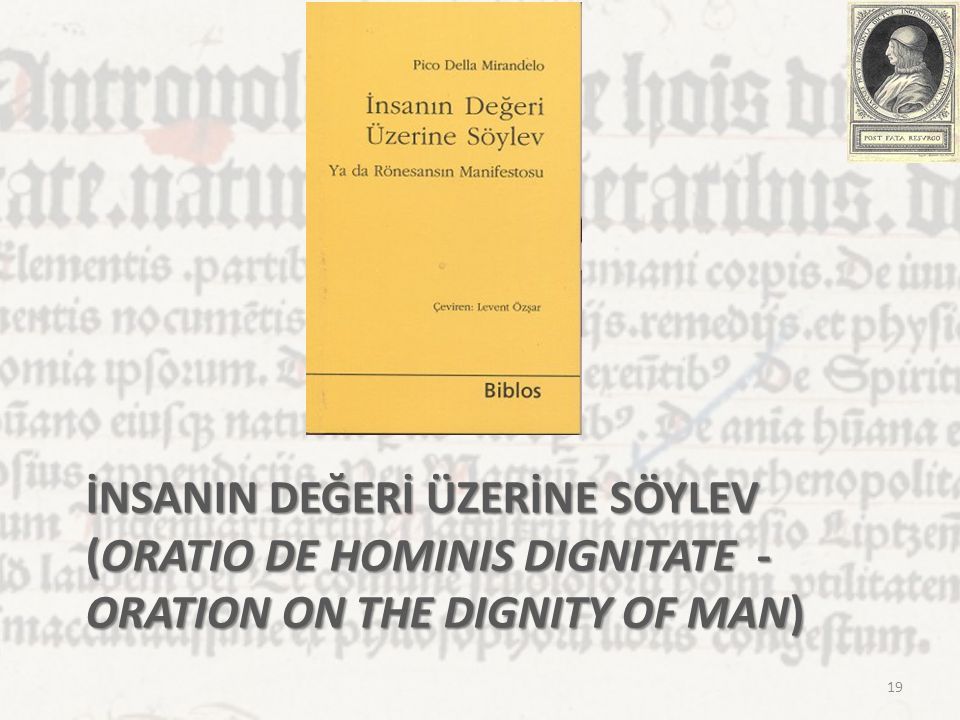
The Oration on the Dignity of Man (De hominis dignitate) is a famous public discourse composed in 1486 by Pico della Mirandola, an Italian scholar and philosopher of. Marsilio Ficino e Giovanni Pico della Mirandola in Italia e la cosiddetta scuola di Cambridge in Inghilterra. Oratio de Hominis Dignitate di Pico della.

How To Uninstall Netlimiter. This article needs additional citations for. Unsourced material may be challenged and removed.
(November 2013) () The Oration on the Dignity of Man ( De hominis dignitate) is a famous composed in 1486 by, an Italian scholar and of the. Rainbow Rainbow Ryu Rare. It remained unpublished until 1496. The Pico Project, a collaboration between, Italy, and, United States, dedicated to the Oration, and others have called it the 'Manifesto of the Renaissance.'
Pico, who belonged to the family that had long dwelt in the Castle of, left his share of the ancestral principality to his two brothers to devote himself wholly to study. In his fourteenth year, 1477, he went to Bologna accompanied by his mother to study canon law and fit himself for the ecclesiastical career. Following his mother's death in 1478, Pico in 1479 requested from the a free passage to, where he would devote himself to the study of philosophy and theology. He spent the following seven years variously in Ferrara,, and, studying Greek, Latin, Hebrew, Syriac, and Arabic at the chief universities of Italy and France. Contents • • • • • • • • • Content [ ] The potential of human achievement [ ] Pico’s Oration attempted to remap the human landscape to center all attention on human capacity and human perspective. Arriving in a place near Florence, this famous Renaissance philosopher taught the amazing capacity of human achievement. 'Pico himself had a massive intellect and studied everything there was to be studied in the university curriculum of the Renaissance; the Oration in part is meant to be a preface to a massive compendium of all the intellectual achievements of humanity, a compendium that never appeared because of Pico's early death.'